Manang Snow Leopard Tracking

Trip Duration

Trip Duration

16 days

Maximum Altitude

Maximum Altitude

4,200m (Ledar)

Difficulty Grade

Difficulty Grade

Moderate to Hard (cold-weather endurance, not technical)

Start & End Point

Start Point & End Point

Kathmandu

Kathamndu

Best Seasons

Best Seasons

January To March

Meals

Meals

BLD

Transportation

Transportation

Private Jeep

Accommodation

Accommodation

Teahouse and lodge throughout

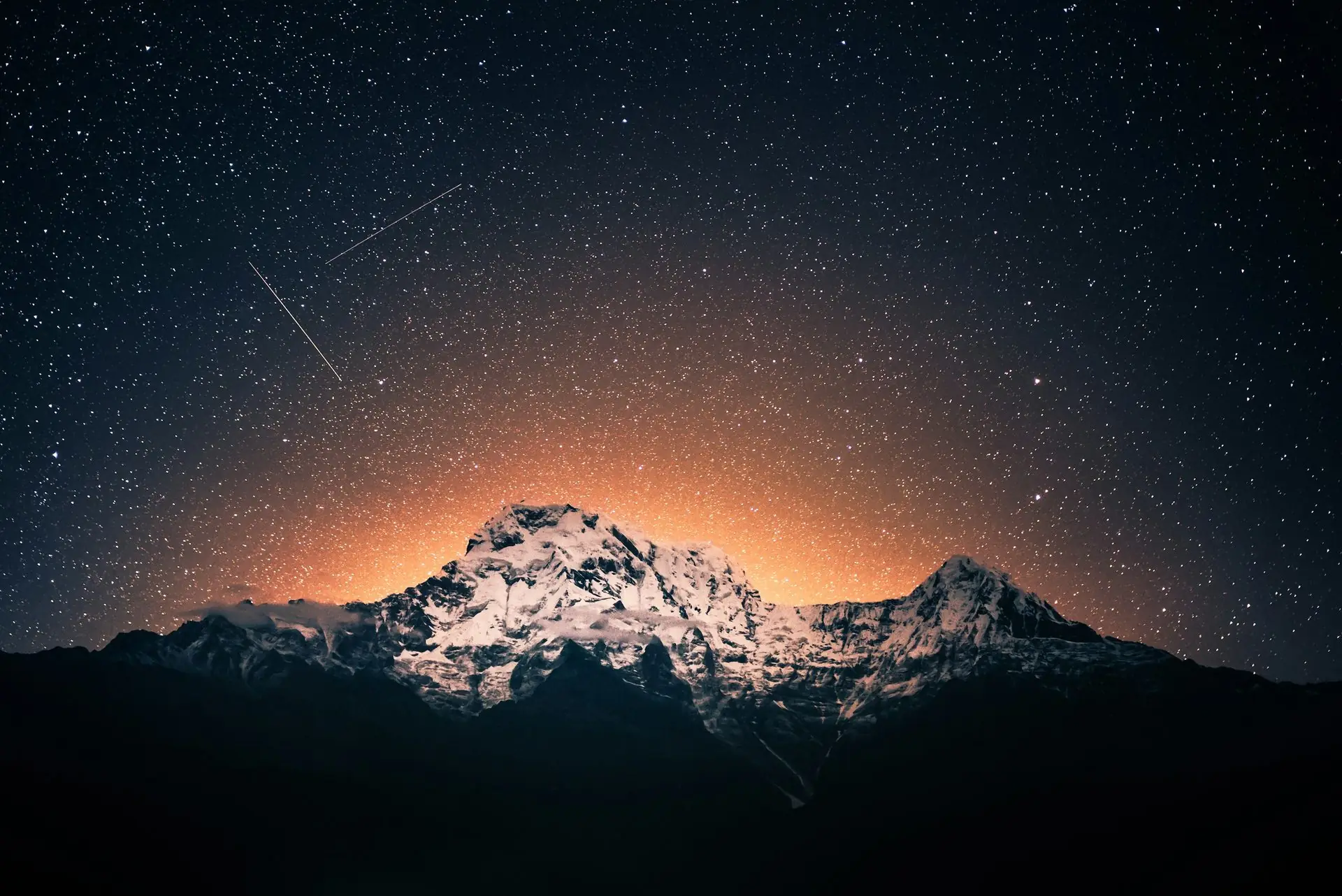
There is a particular kind of stillness that settles over the Manang Valley in January. The teahouses that host trekking crowds every October empty out. The Marsyangdi River slows to a trickle of ice at its edges. And somewhere on the rock faces above Khangsar, Yak Kharka, or the ridges toward Ledar, a snow leopard is moving through territory it has held for years, unseen by almost everyone who will ever walk beneath it.

This is what draws people to Manang in the depths of winter, when every sensible summer trekker has long since gone home. Manang sits in the rain shadow north of the Annapurna range, a high-altitude cold desert of exposed cliffs, fractured ridgelines, and grazing terraces that happens to be one of the most reliable places on Earth to search for the snow leopard, an animal so elusive that field biologists spent decades searching for confirmed sightings before local trackers began mapping its movements in detail. Of Nepal's snow leopard regions, Manang is the most accessible from Kathmandu, the best supported by existing trekking infrastructure, and the region where our scouts spend the most cumulative days in the field. That combination makes it the right starting point for most travellers considering this kind of trip.

We want to be honest with you from the very first paragraph of this page: this is not a wildlife safari, and no operator, however well resourced, can promise you a sighting. What we can promise is expert local tracking, a genuinely well-run winter expedition, and a trip that contributes directly to the conservation work keeping this species alive in Nepal. Read on for exactly what that looks like, day by day.

Understanding the Trip

Why January to March Is the Only Real Window to See a Snow Leopard in Nepal

Snow leopard tracking in Nepal is not a year-round activity, and this is worth understanding before you book, because it explains almost everything else about how this trip is structured.

Snow leopards are obligate predators of the Himalayan blue sheep, known locally as bharal. Through spring and summer, blue sheep herds range across high alpine meadows well above 5,000m, terrain where the cats follow them but where sustained human tracking becomes both impractical and unsafe. As winter closes in and heavy snow buries the highest pastures, the blue sheep are pushed down onto the lower grazing terraces between roughly 3,500m and 4,200m, exactly the elevation band where Manang's established trails and teahouses sit. The cats follow their prey down, and for a few months each year, the animal that spends most of its life in near-total inaccessibility comes close enough to genuinely searchable ground.

This single ecological fact is why every reputable snow leopard operator in Nepal runs departures exclusively between January and March, and why we do the same. Outside this window, the cats are back on the high ridges, the blue sheep have dispersed upward, and the sighting probability drops to something not worth the difficulty or cost of the trip.

Snow Leopard Mating Season in Nepal: What It Means for Sightings

Within the winter window, timing matters further still. Snow leopard mating season runs roughly from late January through February, and it changes the cats' behaviour in ways that directly affect your odds.

Outside mating season, snow leopards are almost silent, solitary, and deliberately avoidant of open ground. During mating season, that changes. Cats vocalise to signal to potential mates across valleys, cross exposed ridgelines to scent-mark territory more actively than at any other time of year, and generally move greater distances in search of partners. For trackers, this is the single strongest window of the year: cats behaving in ways that make them, relatively speaking, easier to detect, even if still genuinely difficult to see.

Our departures place particular weight on mid-February through mid-March, when mating activity overlaps with peak prey concentration in the lower terraces. Early-season departures (late January) trade slightly lower cat activity for the coldest, most reliably snow-bound conditions, while late-season departures (into early April) catch the tail end of mating activity as temperatures begin to moderate slightly. We'll talk through which window suits your dates and priorities when you book.

ITINERARY OUTLINE

Day 1: Arrival in Kathmandu (1,400m) 

Day 2: Kathmandu Cultural Day and Trip Preparation

Day 3: Drive Kathmandu to Besisahar (760m) 

Day 4: Jeep to Chame (2,710m)

Day 5: Jeep or Trek to Pisang (3,200m)

Day 6: Trek Pisang to Manang (3,519m) 

Day 7: Acclimatisation Day in Manang

Day 8: Transfer to Khangsar (3,734m) and First Scoping Session 

Day 9: Tracking Day One, Khangsar Cliffs

Day 10: Tracking Day Two, Yak Kharka Corridor (4,050m) 

Day 11: Tracking Day Three, Ledar Ridges (4,200m)

Day 12: Tracking Day Four, Return to Best-Performing Zone

Day 13: Weather Contingency and Bonus Tracking Day 

Day 14: Jeep Manang to Besisahar 

Day 15: Drive Besisahar to Kathmandu

Day 16: Final Departure


Detailed Itinerary

Day 1: Arrival in Kathmandu (1,400m) Arrive at Tribhuvan International Airport, where a Nepal Vision Treks representative meets you for the transfer to your hotel. Evening welcome briefing covering the trip ahead, gear check, and an introduction to what winter tracking actually involves. Overnight in Kathmandu.

Day 2: Kathmandu Cultural Day and Trip Preparation A guided cultural tour taking in Swayambhunath, Pashupatinath, and Boudhanath, three of the Kathmandu Valley's UNESCO World Heritage Sites, before an afternoon dedicated to final trip preparation: permit processing, equipment fitting for any expedition gear you're borrowing rather than bringing, and a detailed route and safety briefing from your lead guide. Overnight in Kathmandu.

Day 3: Drive Kathmandu to Besisahar (760m) An early departure for the roughly 6 to 7 hour drive to Besisahar, the gateway town to the Annapurna Conservation Area. The road follows the Trishuli and then the Marsyangdi river systems, dropping through terraced farmland and small roadside towns. Overnight in a lodge.

Day 4: Jeep to Chame (2,710m) A dramatic day on the road, roughly 6 to 7 hours by jeep along the Marsyangdi Gorge, climbing from subtropical lower valley through pine forest and up into the first proper high-mountain terrain. Chame, the district headquarters of Manang, sits at the base of striking granite cliffs. Overnight in a lodge.

Day 5: Jeep or Trek to Pisang (3,200m) A shorter travel day, roughly 3 to 4 hours, either by jeep where road conditions allow or on foot along the trail, arriving in Pisang with the first proper views of Annapurna II and Pisang Peak dominating the skyline. Overnight in a lodge.

Day 6: Trek Pisang to Manang (3,519m) A full trekking day, 5 to 6 hours, following the upper or lower trail depending on conditions and your guide's assessment, entering the high-desert landscape that defines the Manang Valley. Manang itself, our staging base for the days ahead, comes into view with its distinctive flat-roofed stone houses and views back toward the Annapurna massif. Overnight in a lodge.

Day 7: Acclimatisation Day in Manang A short, deliberately gentle acclimatisation hike toward Gangapurna Lake and the icefall viewpoint above the village, giving your body time to adjust before the demands of tracking days ahead. In the afternoon, a full briefing from our lead tracking scout covering current conditions, recent sign activity in the area, and the plan for the coming week. Overnight in Manang.

Day 8: Transfer to Khangsar (3,734m) and First Scoping Session A short trek to Khangsar, one of the primary tracking bases for the expedition, where the cliffs above the village have produced consistent sign activity in recent seasons. Late afternoon into evening, our scouts position spotting scopes for the first observation session of the trip, timed to the strongest evening hunting window. Overnight in a lodge or expedition tent, depending on conditions.

Day 9: Tracking Day One, Khangsar Cliffs A full tracking day structured around dawn and dusk observation. Pre-dawn departure to the morning scoping position, several hours of active scanning through the morning, a midday hike along the ridgelines searching for fresh pugmarks, territorial scrape sites, and scat, then a return to the scopes for the late-afternoon and evening session, statistically the strongest sighting window of the day.

Day 10: Tracking Day Two, Yak Kharka Corridor (4,050m) Relocation to the Yak Kharka migration corridor, a different terrain profile from Khangsar and one that regularly shows strong blue sheep concentrations during this season. Same daily rhythm: dawn scoping, midday sign-tracking hike, dusk observation.

Day 11: Tracking Day Three, Ledar Ridges (4,200m) A move to the quieter ridges around Ledar, the highest point of the tracking phase and generally the least disturbed terrain of the three primary zones. Full day of scoping and sign-tracking, with your scouts adjusting the plan in real time based on any activity reported over the previous two days.

Day 12: Tracking Day Four, Return to Best-Performing Zone Rather than following a fixed rotation, day four returns to whichever of the three zones has shown the strongest recent activity, based on your scouts' accumulated observations from the trip so far. This flexibility is one of the genuine advantages of working with experienced local trackers rather than a fixed itinerary.

Day 13: Weather Contingency and Bonus Tracking Day A built-in buffer day, used either to extend tracking in response to strong recent sign, or to absorb any weather delays from earlier in the trip. For travellers not needing the buffer, this day also allows time for a visit to Braga village and its centuries-old gompa, one of the most significant monasteries in the region.

Day 14: Jeep Manang to Besisahar The return journey by jeep, roughly 7 hours back down through the Marsyangdi Gorge to Besisahar. Overnight in a lodge.

Day 15: Drive Besisahar to Kathmandu A final 6 to 7 hour drive back to Kathmandu, arriving in the afternoon or early evening. Farewell dinner in the evening to mark the end of the expedition. Overnight in Kathmandu.

Day 16: Final Departure Transfer to Tribhuvan International Airport for your onward flight.

Note: this itinerary can be shortened by two to three days for travellers who add helicopter access on the inbound or outbound leg between Kathmandu and Manang, reducing road time in favour of additional tracking days. Ask us about this option when booking.

  • All ground transport: private vehicle Kathmandu–Besisahar–Chame–Pisang–Manang and return
  • Annapurna Conservation Area Permit and all applicable trekking permits
  • Government-registered, English-speaking lead guide plus dedicated local snow leopard tracking scouts
  • Porter support (weight limits applied in line with porter welfare standards)
  • Teahouse or lodge accommodation throughout, twin-share
  • Full board meals (breakfast, lunch, dinner) from Day 3 through Day 15
  • Kathmandu hotel accommodation with breakfast (Days 1, 2, 15)
  • Kathmandu cultural sightseeing tour with guide and entrance fees
  • Welcome and farewell dinners in Kathmandu
  • Spotting scopes provided for tracking days
  • Airport transfers
  • Contribution to local snow leopard conservation programmes
  • Trip documentation, permits paperwork, and detailed pre-departure gear guidance
  • International airfare to and from Kathmandu
  • Nepal visa fees
  • Travel and rescue insurance (mandatory; must include high-altitude and helicopter evacuation cover)
  • Personal cold-weather gear and photography equipment (full kit list provided at booking; select expedition items available to rent through us)
  • Optional photography guide upgrade (priced separately)
  • Meals in Kathmandu outside the two included dinners
  • Personal expenses: hot showers where charged separately, device charging, alcoholic beverages, tips for guides, scouts, and porters
  • Any additional nights required due to early arrival, delayed return, or weather-related itinerary extension

ONGOING TRIPS

JOIN FIXED DEPARTURE TRIPS

Departure Date Status Prices
{{ departure.package.duration }}
From {{ formatDate(departure.start_date) }} - {{ formatEndDate(departure.start_date, departure.package.duration) }}

guranted Guaranteed

{{ departure.total_seats - departure.booked_seats }} Seats Left
${{ departure.package.discounted_price }} ${{ departure.package.price }}
${{ departure.package.price }}
No departures found for August, 2026

TESTIMONIALS

star
tripadvisor
FAQs

All Inclusive Cost

On Request

Total Price
US $On Request

Got Queries? We’re at your service

whatsapp

+977-9802342081

We’re Listening

Tell us what you need—just fill out the form and we’ll take it from there.


HOLIDAY PACKAGE OFFER

GET SPECIAL OFFERS

Sign up now to receive hot special offers and information about the best tour packages, updates, and discounts!

Subscribe to receive exclusive deals, destination highlights, and insider travel tips delivered straight to your inbox.

Contact Us
  • tripadvisor
  • newyorktimes
  • expedia
  • condé nast
  • lonely planet
  • forbes travel