



Best Hidden Sunrise Treks in Nepal (Beyond Poon Hill & Everest)
 Nepal Vision Treks
 Mar 9, 2026
 15 Min Read
Trekking in Nepal and the early morning view as the first light spills across snow-covered peaks or the evening sun paints the mountains in shades of gold and crimson, the landscapes transform into something unforgettable.
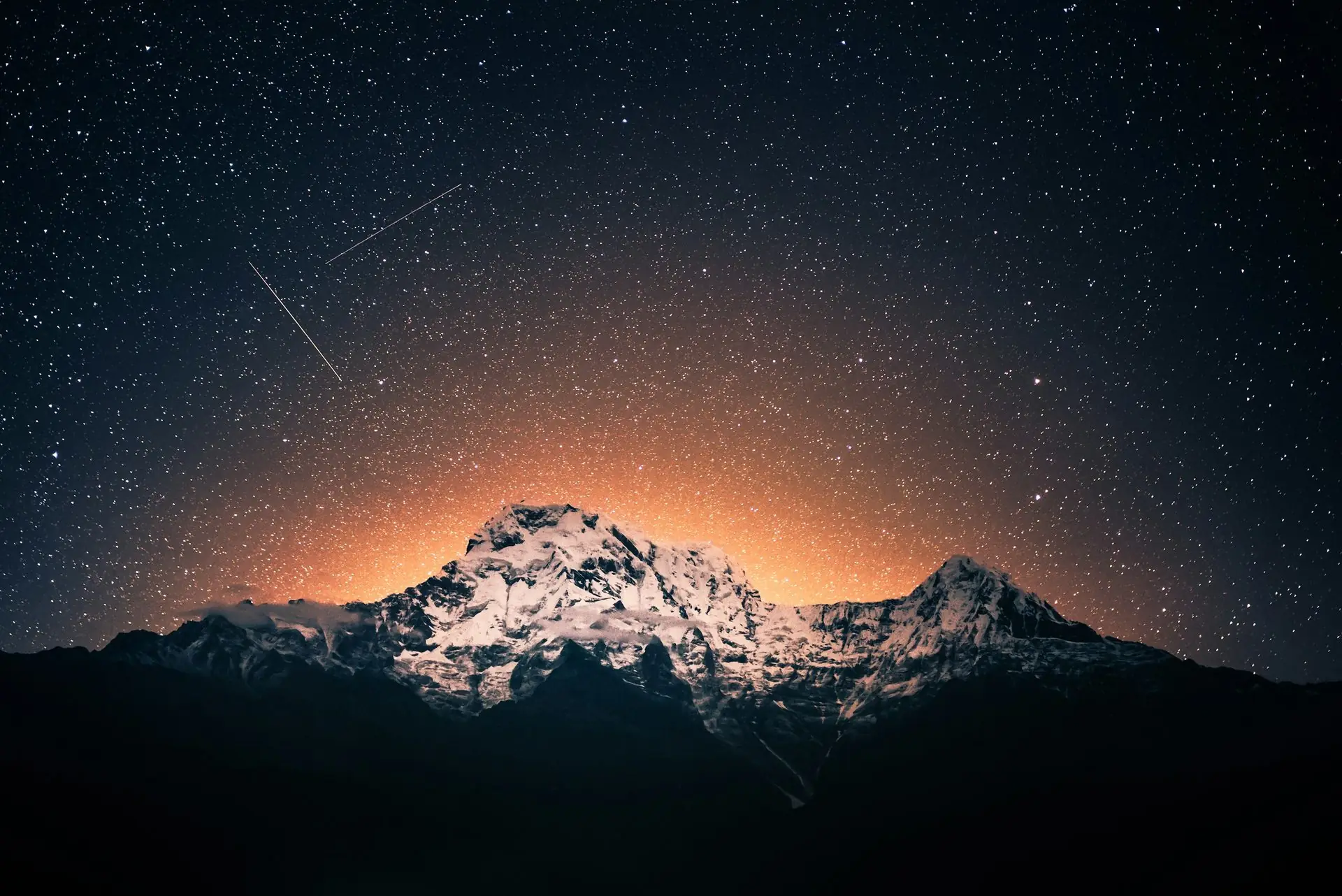
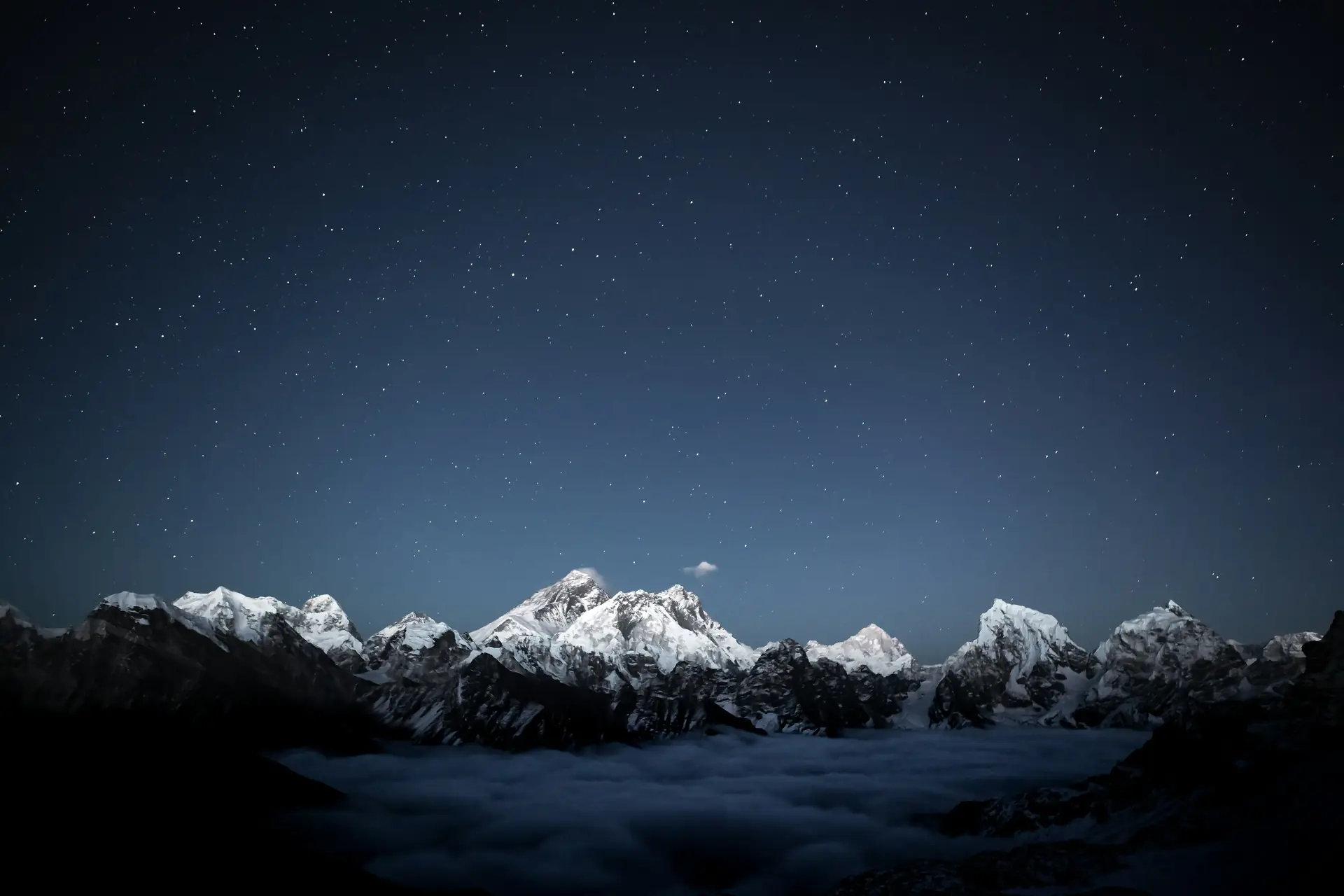
It happens before the sun is fully up. You're standing on a cold ridge, breath visible in the dark, legs tired from the climb. The mountains are just shapes in the black sky ahead of you, massive, silent, impossible. And then, slowly, the first light arrives. Not all at once. It starts at the very top, a thin line of orange on the highest peak, and then it bleeds downward, peak by peak, until an entire wall of ice and snow is glowing like something set on fire from the inside.
That's the Himalayan sunrise. And once you've seen it, you spend the rest of your life finding excuses to come back.
Nepal is one of the few places on earth where this experience is available to almost anyone.
This guide includes all of them, the classic routes that have gained their fame over decades, as well as the new category of the hidden gems of the best sunrise treks in Nepal
Classic Sunrise Treks in Nepal
These paths have been built over decades. Both of them provide a truly global quality morning experience - and each of them is a global icon in its own way.
1. Poon Hill / Ghorepani
- Altitude: 3,210m
- Time: 4-5 Days
- Strain: Easy-going.
If Nepal has a signature sunrise, it happens in the Poon Hill trek. Trekking early in the morning before daylight, 45 minutes after ascending the tower, the trekkers ascend the Poon Hill tower, with headlamps piercing the darkness of Ghorepani village. Their first view is one of the most photographed mountain landscapes on the planet: Dhaulagiri (8,167m) and the whole Annapurna massif blazing into amber, rose, and gold during the sunrise. Machhapuchhre, the sacred fishtail mountain that is nearest, is so near that it makes it seem a bit theatrical.
The four-day trek between Pokhara traverses a rhododendron forest is officially the largest in the world. During spring, the whole trail is bordered with red, pink, and white flowers. The Gurung and Magar villages along the path are some of the friendliest villages in the Annapurna area, and the teahouse facilities are excellent everywhere.
- Best For: First-time trekkers, families, spring rhododendron visits.
- Sunrise Peaks: Dhaulagiri, Annapurna I- IV, Machhapuchhre, Hiunchuli.
- Permits Required: TIMS card and ACAP permit (est. $30 each)
- Hint: Reach Poon Hill tower by 5:30 AM. The crowd increases rapidly after 6 AM.
- Combine with: Ghorepani-Ghandruk loop to make the circuit richer, 6-7 days.
2. Sarangkot Sunrise
- Altitude: 1,592m
- Duration: Half-1 Day
- Difficulty: Easy
Sarangkot is the sunrise experience for everyone, no multi-day trek required, no altitude concerns, and the views are astonishing for a 1,592m hill. A 30-minute drive and 45-minute walk out of the lakeside of Pokhara, Sarangkot provides a complete panorama of the Annapurna and Dhaulagiri ranges in the calm waters of the Phewa Lake down below. The mountain, the lake, and the sky in the dawn are entirely peculiar to this point of view. This very stratification of elements is not to be found elsewhere in Nepal.
Most of the way up is drivable, so even those travellers who are not trekkers can hike the last 20 minutes up. To seek out the whole experience, it takes roughly 2.5 hours to hike up the well-marked pathway all the way out of the Pokhara lakeside. No special permits needed.
- Best: Short stay travellers, families, non-trekkers, anyone visiting Pokhara on an itinerary.
- Sunrise Peaks: Annapurna South, Machhapuchhre, Hiunchuli, Dhaulagiri.
- Permits Required: None
- Pointer: The Phewa Lake reflection is best seen during the months of October and November. Blend with afternoon paragliding.
- Combine with: Hiking to World Peace Pagoda on the same day.
3. Nagarkot & Changunarayan
- Altitude: 2,165m
- Duration: 2-3 Days
- Difficulty: Easy
Nagarkot earns its Lonely Planet recommendation for one extraordinary reason: On a clear day. You can see eight of Nepal's thirteen Himalaya ranges in one sight from Dhauligari in the West to Everest in the East. That 800km stretch of mountains being lit by the sunrise is a part of the experience that even the seasoned trekkers who have stood at much higher viewpoints still rate as one of their most memorable moments in Nepal.
Nagarkot is only 32km east of Kathmandu and is an excellent match for a Kathmandu valley tour. It is also employed as the route down to Changunarayan Temple, a 2nd-century Hindu shrine and UNESCO World Heritage Site gives the trekking experience an added cultural value.
- Best For: Kathmandu-based travellers, cultural trekkers, short-stay visitors.
- Sunrise Peaks: Everest, Langtang, Gaurishankar, Dorje Lakpa, Manaslu, Dhaulagiri.
- Permits: To the viewpoint, none are required.
- Note: It is better to spend the night in Nagarkot hilltop lodge, and watch both the sunset and sunrise in a single visit to the hill.
- Combine with: Bhaktapur Durbar Square before or after the walk.
4. Kalapatthar and Everest Base Camp.
- Altitude: 5,643m
- Duration: 12-14 Days
- Difficulty: Hard
This is the summit of the sunrise trekking in Nepal. The highest non-technical point on the earth, where the entire south face of Mount Everest can be seen, is known as Kalapatthar at 5,643m. As the sun comes up on the Lhotse-Nuptse wall and the first orange light falls on the top pyramid of Everest, you are looking at something which will never be properly recorded in any photograph. Hiking is a truly life-changing experience.
You take part in it as it is part of the EBC trek, the pre-dawn climb of the Kalapatthar, and it starts at Gorak Shep, at approximately 4 AM. The cold at this altitude in the early morning is very severe, -15 °C is often the temperature. But according to all trekkers who have ever made that climb, the arrival at the rocky top of the mountain is one of the most memorable events of their lives.
- Best: Experienced trekkers, those who need to put it on their bucket list, and high-altitude lovers.
- Sunrise Peaks: Everest, Lhotse, Nuptse, Cho Oyu, Pumori, and Ama Dablam.
- Permit: Sagarmatha National Park permit (~$30) + TIMS card.
- Tip: An acclimatization at Namche and Dingboche. Do not hurry up the mountain to get altitude sickness.
- Combine with: Helicopter return trip: Gorak Shep air tour of Everest.

Hidden Sunrise Viewpoints in Nepal Beyond the Crowds
It is these perspectives that the experienced trekkers are privately murmuring about: the equally beautiful sunrise views, a quarter of the traffic, and in some other places, even better mountain views than the classics.
5. Pikey Peak: Solukhumbu
- Duration: 5-6 Days
- Altitude: 4065m
- Difficulty: Moderate
If one sunrise viewpoint in Nepal is criminally underrated, it is Pikey Peak. Sir Edmund Hillary, the man who stood on the summit of Everest itself, reportedly called this the finest Everest view he had ever seen.
There is a 200 m elevation named Pikey Peak. At dawn, it offers an overview of Everest, Kanchenjunga, Manaslu, and Dhaulagiri, all 8,000m high, in a single view. No other single type of vision in Nepal offers heights as complete as this.
The approach is through Sherpa villages that seem virtually untouched by mass tourism in the Solukhumbu district. The paths are not paved, and the teahouses are not fussy, and the number of people at the top of the mountain is not in the hundreds. It is the grandeur of the EBC experience at just half the price, half the time, and without the fan.
- Best: Experienced trekkers who do not want to spend money and time on EBC but enjoy Khumbu.
- Sunrise Peaks: Everest, Kanchenjunga, Manaslu, Dhaulagiri, Makalu in a single picture.
- Why It's Underrated: No paved road access keeps crowds to a minimum. Authentic teahouses throughout.
- Tip: Combine with Lower Everest Base Camp for a 10-day off-the-beaten-path Khumbu circuit
6. Khopra Danda & Khayer Lake: Annapurna
- Altitude: 3,660m
- Duration: 7–8 Days
- Difficulty: Moderate
Khopra Danda sits 450 meters higher than Poon Hill and offers a sunrise over Dhaulagiri, Annapurna South, and the Nilgiri range, a view many trekkers rate as superior to the famous hilltop nearby.
And where Poon Hill on a normal morning is known to be full of hundreds of headlamps, Khopra Danda is the place where you can share the sunrise with just a few trekkers at the most.
The option to reach Khayer Lake, at 4,600m, is the best part of this trek, sacred by both Hindus and Buddhists. In addition to the world-class views of the sunrise, Khopra Danda is a two-in-one place that none of the other places on this list can match.
- Best: Trekkers who have already visited Poon Hill and are looking for the next step up.
- Sunrise Peaks: Dhauligari, Annapurna South, Nilgiri, Tukuche Peak.
- Unique Feature Sacred Khayer Lake 4,600m pilgrimage site and alpine gem in one.
- Trick: Spend the night at the Khopra Community Lodge; all profits go to local families.
7. Gokyo Ri and the Lakes, Everest region.
- Altitude: 5,357m
- Length: 12 Days
- Difficulty: Hard
Kalapatthar receives all the coverage in the Khumbu. Yet Gokyo Ri is perhaps the most impressive place for a sunrise. It is 5,357m, where one can see Everest, Lhotse, Makalu, and Cho Oyu, the four highest peaks in the world, set against the blue of Gokyo Lakes, and the immense white expanse of Ngozumpa Glacier, the longest glacier in the Himalayas.
The rest of the world has never had glacial lakes, an enormous glacier, and four 8,000m peaks all in the same sunrise shot at the same time.
- Best: Serious trekkers seeking a Kalapatthar substitute that has greater visual flair.
- Sunrise Peaks: Everest, Lhotse, Makalu, Cho Oyu, and Ngozumpa Glacier below.
- Why It's Underrated: The foreground is composed of Turquoise Gokyo Lakes, making this composition of the dawn unmatched.
- Tip: Try the Three Passes Trek with the Khumbu grand circuit, 18 days.
8. Kalinchowk: Dolakha District
- Duration: 2 Days
- Difficulty: Easy
- Elevation: 3,842m
The Kalinchowk is the most accessible sunrise point in Nepal, and it is almost unmentioned in any international travel blogs. It is the favourite of Nepali domestic travellers, being located at 3,842m in Dolakha district, reached by road and cable car, that is, without having to hike over many days to achieve a true high-altitude view of the sunrise.
The very Langtang, Rolwaling and Khumbu ranges in the dawn are breathtaking, and during winter the surrounding scenery is blanketed in snow, presenting a landscape that looks impossible dramatic, considering how easily it can be reached.
- Best For: Visitors planning a short stay who need high altitude but do not want to spend a lot of time trekking.
- Peaks of the sunrise: Langtang range, Rolwaling range, Gaurishankar, distant Khumbu peaks.
- Why It's Underrated: Reachable via cable car - the easiest access point to the sunrise in Nepal.
- Note: Snow-covered scenery and the lowest number of foreigners visiting the country are seen in December and January.
9. Pumdikot: Pokhara
- Altitude: 1,600m
- Duration: Half Day
- Difficulty: Easy
Pumdikot is the less noisy and more environmentally friendly option that the locals have been visiting since time immemorial. There is also a giant Lord Shiva statue that has recently been built on top of the hill, giving the spiritual touch to the sunrise experience. The perspectives of the Annapurna range and the Pokhara Valley in the morning are breathtaking, and at this moment, you will probably have a few people to share the views with, and not a mob.
For travellers with a single morning in Pokhara, Pumdikot delivers a genuinely memorable experience with almost no planning required.
- Best For: Pokhara travellers, religious travellers, photographers, first-timers.
- Sunrise Peaks: Machhapuchhre, Annapurna range, Lamjung Himal.
- Why It's Underrated: The Lord Shiva statue is spiritual and picturesque on a day excursion.
- Hint: Not at all as busy as Sarangkot. Have them both in the morning, first Pumdikot and then Sarangkot.
Sunrise Trek: What Is Your Trek?
- You have 1-2 days: Sarangkot, Pumdikot (both Pokhara), Nagarkot (Kathmandu), or Kalinchowk (Dolakha).
- You seek the traditional classic: Poon Hill / Ghorepani - the most splendid debut trek in Nepal, and spectacular in spring and fall.
- You would rather see fewer people with an equal perspective: Pikey Peak, Khopra Danda, Pumdikot, or Mardi Himal.
- You desire the bucket-list sunrise: Kalapatthar + EBC, or Gokyo Ri + Lakes - needs 12-14 days and requires physical fitness.
- You desire cultural richness combined with the sceneries: Nagarkot + Changunarayan, or Antu Danda (Eastern Nepal), to immerse yourself in the homestay world.
To wrap up, once you've watched the first light hit the Himalayas, really watched it, standing on a cold ridge with your breath visible in the dark, everything else just feels like the sky getting lighter.
There is no wrong choice. The only mistake is not going.
So pick a trek, pack an extra layer for the pre-dawn climb, and let the mountains do the rest.
Willing to Watch the Himalayas Catch Fire?
Nepal Vision Trek will assist you in planning a sunrise trek exactly as much as your time, fitness, and budget allow, even the hidden secrets most tour operators are unaware of.