

Trip Overview
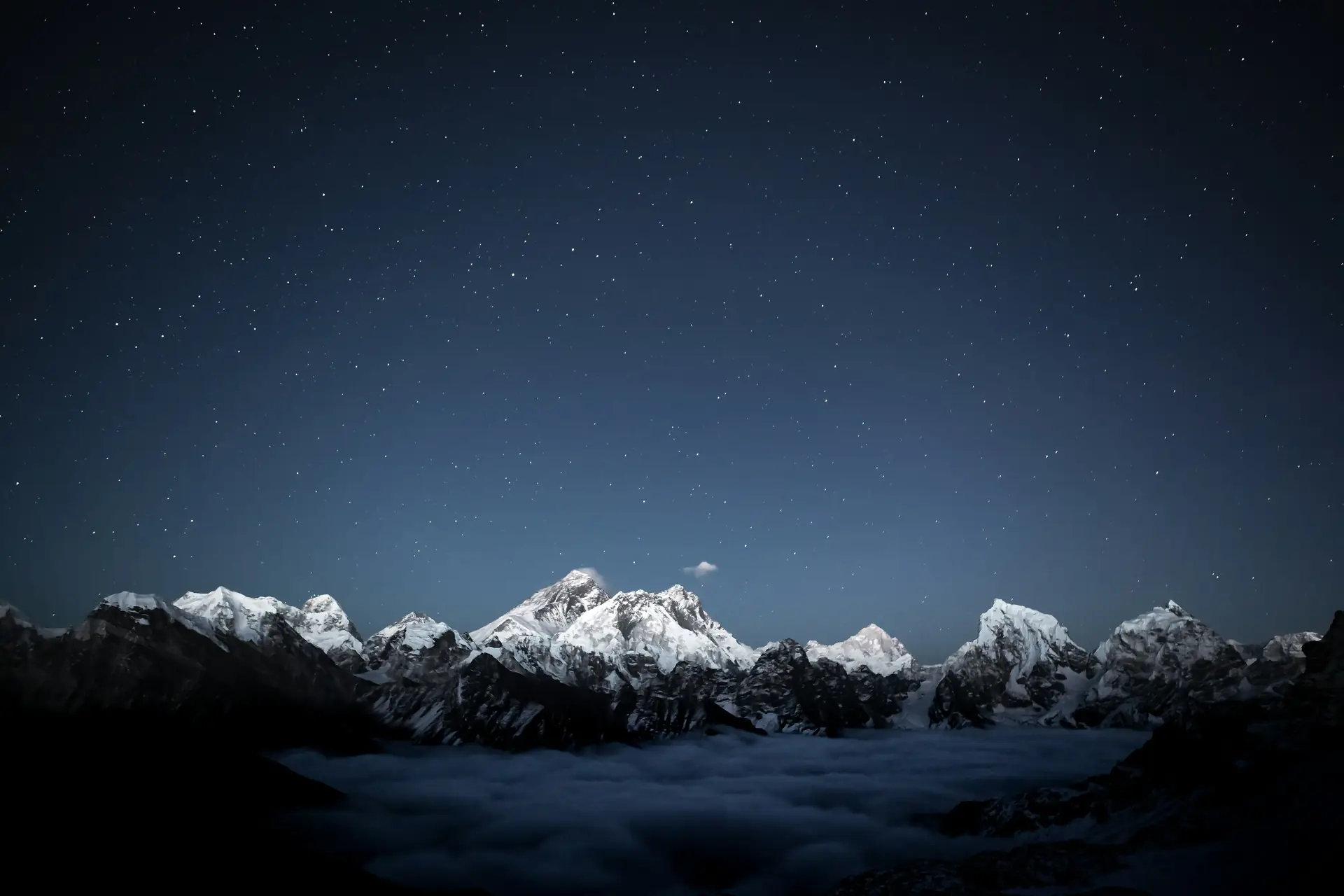
The Mera Expedition is a high-altitude trek and climb and participants need to be physical fit and acquainted with the use of an ice-axe and crampons. Instruction in the use of these will be given at Kathmandu and at base camp near the Khare which is a part of our Mera trip. These training are a useful preparation for participant to be familiar with climbing technique before heading for the wonderful summit to Mera Peak. It is possible for an experienced traveler to reach the summit and return to base camp in one day however is it suggested to establish a high-camp at 5,750m/18,865ft, in order to shorten the summit day. This trip is a rewarding experience as it provides glorious views of Nepal and a vista that takes in Kangchenjunga and Makalu to the east and Everest appearing over the massive southern aspect of Nuptse and Lhotse to the north. To the west stand the spires of Ama Dablam and Kang Taiga and in the distance is the mighty bastion of Cho Oyu. This is a finest panorama of many of the world's highest peaks.
We avoid the usual route to the mountain as we prefer to follow a more esoteric, wilderness trek than that used by others. Our trek to the foot of the mountain takes us through the Nepalese countryside, visiting remote farming communities before crossing steep valleys and then following a high ridge, with magnificent views, towards our final goal. After the climb we descend into the quiet Hongu Valley and head north towards the huge bastion of Lhotse. The Amphu Labtsa is our exit from the head of the Hongu Valley. Reaching it is not difficult, but the descent on the far side requires the use of fixed ropes. As we descend, we will have excellent views of Island Peak just across the Imja Valley. Another few days walk down via classical route of Everest Base Camp takes us back to Lukla and we fly back to Kathmandu to end our trip.
Sample day on "Mera Peak climbing"
Each evening is spent as per your interest for reading or chatting with the fellow trekkers and crew members or a pack of cards is an advantage; the crew love teaching various Nepali card games and learning new Western games. Our porters and Sherpa's also like to have singing and dancing competitions in which they love you to join in! Finally, it's off to bed for a well deserved night's rest before you start it all again.
Outline Itinerary
Detail Itinerary for Mera Peak climbing
Day 01: Arrival day in Kathmandu (1,300m/4,264 ft)
At the airport you will be met by our representative and transferred to the Hotel. Your kitbag containing sleeping bag, down jacket will be issued upon arrival and individual equipment/gear checks will be held during the afternoon. A pre-trek briefing will be held at evening and is a great opportunity to get acquainted with your fellow group members before heading out to dinner.
Day 02: Rock climbing/ Kathmandu valley sightseeing & trip preparation
After breakfast, we drive 3 Kms drive to the place called Balaju, a natural rock climbing spot. You would have 3 to 4 hours rock climbing training course escorted by our climbing expert. This is the time for you to learn the required climbing technique to attempt Mera including with using rope, ice axe, crampons etc. Instead, you may join our city tour of Kathmandu valley which covers the main highlighted parts of the valley eg- Kathmandu Durbar Square, Monkey Temple, Pashupati Nath and Bouddha. Evening you will have a formal introduction with your trek/climb leader; check your final climbing equipments. Over night at Kathmandu
Day 03: Fly to Lukla (2800m/9184ft) & commence trekking to Puiyan (2800m/9184ft)
We will be taken to the airport for one of the great flights of the Himalaya. If the sky is clear during our flight, we will get our first views of Everest and the region in which we will be climbing. The Twin Otter aircraft will take us to the hillside village of Lukla, which is the start of our trek to Mera. Here we will meet our camp staff and porters and set off straight away for our first camp at Puiyan.
Day 04: TTrek to Pangkongma (2,850m/9348ft), 4-5 hrs walk
After breakfast cross the Poyan Khola, then we turn off the main trade route coming up from the south and join an older route, which climbs steeply to the ridge-line overlooking the Khare Khola. Descending the other side of the ridge, we then contour along the hillside before climbing steadily up to the attractive farming and trading village of Pangkongma. Many expedition members have been made welcome by the villagers here, spending several pleasant hours warming themselves in front of an open fire in the enveloping and welcoming atmosphere of the local's traditional Sherpa homes.
Day 05: Trek to Nashing Dingma (2600m/8528ft), 5-6 hrs walk
Today we climb the half hour or so to the Pangum La (3175m/10410ft) and our gateway toward the Hinku Valley, and now start to head eastward and then in a northerly direction. Today is a solid descent to the Hinku River of at least 900 meters depending on which path we take, and then a climb up to our camp high on the other side near the Surke La. We are once again traveling through a mix of terraced slopes containing grain crops interspersed by undisturbed forests of the upper temperate zone; maples, rhododendrons and fir.
Day 06: Trek to Chalem Kharka (3600m/11808ft), 5-6 hrs walk
After breakfast we climb up to the Source La (3085m/10118ft) we now follow the spine of the Surkie Danda ridge northwards towards Mera and the Hinku and camp part way along at a yak herders clearing or kharka. These next few days are far from teahouse and trekkers trails and should be some of the finest Himalayan wilderness trekking of the trip.
Day 07: Trek to Chunbu Kharka (4200m/13776ft), 5-6 hrs walk
Continuing along the ridge, we climb higher and higher over knolls (lumps in the ridge) of 4000 meters and then 4500 meters. The terrain has now elevated well above the tree line and is grassy slopes and rocky outcrops and cliffs, where birds of prey may be seen flying overhead such as Griffon vulture, lammergeyer or eagles. We then descend to a camp set near a series of five lakes, Panch Pokhari, set beside the river of the Chunbu Kharka.
Day 08: Rest day at Chunbu Kharka
Today is a rest day and a lovely natural setting to explore further.
Day 09: Trek to Hinku valley camp (3600m/11808ft), 5-6 hrs walk
Our route now contours around many ridges on the eastern side of the Hinku, descending lower into forests of rhododendron. Near the valley floor we encounter the devastation caused by a natural damn at the head of the valley bursting in 1998. The valley has been destroyed, leaving boulders, dead trees and silt where once there were old growth forests and meadows. Our campsite is on a pleasant grassy patch, on the now much higher bank of the rocky riverbed.
Day 10 & 11: Trek to Tagnag (4400m/14432ft), 5-7 hrs walk
Today we are now in the Hinku Valley proper, and cross over by way of a yak herder's bridge and join the main trail. The first settlement we stay at the busy village of Kote, primarily servicing the trekking groups that come through for Mera. As a result of the tremendous washout of boulders and debris, the trail follows the riverbed mostly, a good trail among rounded stones and silt. We gain our first views of dramatic peaks of the valley; Kusum Kanguru to our left that stands directly before us. The path then weaves up on to the pastures on the left hand side and pleasant easy trails through to Tagnag. Today we also enjoy our first views of Mera, initially at the confluence of the Sanu Drangka above Kote, if the weather is clear we see the dramatic south face, and then on our final approach into Tagnag. We are now among mountains and starting to prepare for our climb.
Day 12: Trek to Khare (4,940m/16203ft), 3-4 hrs walk
Today we can experience an excellent valley opening out views to the north of the Hinku Nup glacier and the line of peaks beyond. Behind us is the dramatic spire of the less than romantically named 'Peak 35', which has yet to be climbed. Only the last section up to our base camp at Khare is steep and reminds us that we are gaining altitude. It's a short climb and we are there in good time for lunch.
Day 13: Trek to Mera Base Camp (5000m/16400ft), 3-4 hrs walk
A steady climb out of the valley and up through lateral moraine and grassy culverts to our last camp below the snowline. The route itself is fairly straightforward, there are objective hazards and good basic technique and awareness of changing conditions is vital for every individual.
Day 14, 15 & 16: Summit attempt on Mera (6,476m/21,247ft), 5-9 hrs walk
These three days going to plan and the weather on our side, we would move up to a rock and glaciated camp just off the Mera La saddle at approx 5400m/17712ft. Plastic mountaineering boots are usually worn from base through to the summit bid and return. Whilst they feel clumsy they are perfect for the job, providing warmth, protection and stability for the variable terrain including loose rocks, snow and ice. Another camp is set half way up the long North Slope of the mountain, at about 5700m/18696ft near a rock knob. Although it is a shorter distance here, it can be difficult in poor conditions and you are at altitude and are harder and further than it first appears. The summit bid will be made early in the morning (anywhere from 2am to 5am) from this high camp, and take around 4 to 6 hours to make the summit. Whilst the distance doesn't look far, we can assure you it will be hard work, and all the preparations and a positive, tempered attitude will pay off here. It is usually necessary to rope up for much of the summit approach due to crevasse hazards along the route. The route can vary depending on the conditions of the season but usually skirts around a major shoulder in front of us to the back side of the mountain and then traverse in a fairly straightforward approach to the summit knob. As the light comes, we enjoy incredible views across to Baruntse (7129m), Chamlang (7319m) and Nau Lekh (6360m) with Makalu (8481m) looming behind. Further to our left is Everest, peaking over several unnamed peaks of the Hinku. To the south we can see for miles down to the terrain. We aim to make the summit early/mid-morning and return to base camp after summit. The exact schedule will depend on many factors, including the weather, condition of the route and condition of the members. Our contingency of equipment and experienced staff and a time buffer, gives us a fair amount of flexibility to achieve success for all who have worked hard and consistently from the beginning of the expedition. The day will be long, and this is where all the training beforehand, the trek approach, and the right attitude will combine to give you stamina and confidence to be part of a sound team, with optimum chances for the summit.
Day 17 & 18: Commence trek into the Hunku Valley(5,400m/17,717ft), 5-7 hrs walk
We will need to make a relatively early start today. Once our porters are organized we will commence our most remote stages of the expedition. We descend into the Honku valley near to five large glacial lakes which sprawl out before us. They are known as Panch Pokhari (five lakes). The Amphu Laptsa pass is situated immediately at the head of the valley to our right and is basically the low point on the ridge between the Hunku and the Imja valleys. For this day or so we are in the Hunku. A new vista of peaks span out before us including Ama Dablam to the distant westward, and many unnamed peaks. Camp is set close to the rocks that lead up to the pass. On these stages we ask that members be flexible and co-operative. Camps will be set where conditions allow, and your leader will keep you advised as to each days plan.
Day 19: Rest day at Amphu Laptsa base camp
Final preparations and gear checks for our pass crossing Amphu Laptsa.
Day 20 & 21: Cross Amphu Laptsa (5845m/19171ft) to Pangboche (3,860m/12,664ft), 8-9 hrs walk
After early breakfast an alpine start for our pass crossing. Once again, ferrying across all our loads together with all party members, crew, porters and members takes time. The approach to the pass from the Hunku is deceptive. Facing east and southward there is much more sun and little snow, just a collection of rocks that gradually lead up to the gap we travel through. On the north facing side we find steep slopes of snow that we must take care to descend by fixed ropes to the snow basins below and subsequent moraine and alpine valley beyond. The views from this pass crossing to the peaks of Khumbu are unmatched. Any spare moment one may have whilst we are climbing and descending will allow one to appreciate the spectacle of the peaks of the region.
Day 22 & 23: Trek to Lukla, 6-7 hrs walk
We begin our exit trek descending through the famous Khumbu Valley to Tangboche Monastery and Namche Bazaar. Namche is known as the Sherpa capital and it is a great place to wonder around, visit the Tibetan stalls or enjoy the Swiss bakeries. We descend the slopes of Namche to the Dudh Kosi joining the main trail to follow at riverside through numerous villages to Phakding. On crossing the bridge, we trek a short distance up and around, to the broad flat spur that Lukla lies upon. The last night is always memorable for an end of trip celebration with all the crew and porters.
Day 24: Fly back to Kathmandu
After an early morning flight to Kathmandu our guide transfer you to your hotel. You may have time to relax after long journey and take back your breath and rest at your hotel with ending your Himalayan trip with us. The remainder of the day is at leisure to rest, relax or explore and shop in the town.
Day 25: Departure from Kathmandu
Today is free or last minute shopping for souvenirs or gift to your family, friends or relatives for you until your departure flight/drive or to commence any extra trips or activities you may have booked with us. If departing, you'll be transferred to the International Airport for your departure flight to your onwards destination.
We wish you a wonderful Himalayan adventure with us!
Prices
$2590 per personPlease Check Our Fixed Departure Dates & Pricing for year 2010 in Departure Dates Tab
Inclusions:
- All ground transportation by private vehicle in Kathmandu
- Deluxe twin sharing accommodation in Kathmandu with breakfast
- Welcome & farewell dinner in Kathmandu
- Sightseeing trip with city tour guide in Kathmandu as per itinerary & monument entry fees
- All domestic airfares as per the itinerary
- Full board meal (breakfast, lunch, dinner, tea & coffee) in during the trek
- Comfortable accommodation on teahouse/lodge & camping during the trek and climbing period
- Trekking/Climbing peak permit/s & other necessary fees
- Necessary climbing gear & equipments
- Trekking/Climbing Guide (English speaking, First Aid trained), Sherpa helper, all payments
- Sagarmatha National park entry fee and permit
- Gamow Bag( Portable altitude Chamber Bag) for safety measure on request
- Nepal Vision duffle bag
- Exclusive medical kit bag
- All government and local taxes
- Visa fees, intl. airfare & departure taxes
- Personal climbing equipment (can be buy/hire in Kathmandu)
- Excess baggage charges while in domestic flight
- Lunch and dinner in city
- Travel and rescue insurance
- Personal expenses e.g. phone calls, laundry, bar bills & extra porters
- Tips for driver, guides and porters
- Any extending trips
- Services doesn't includes in service inclusive column
All prices are in US dollars and do not include international airfare, unless otherwise noted.
Departure Dates Mera Peak climbing
We provides a series of fixed departure trek, tour and expeditions in Nepal, Tibet, Bhutan and India. If you are single and wishing to be with a group, you can join our fixed departure schedule. If the schedule dates are not convenient for you, contact us & let us know; we are more than happy to customize our trips to suit your needs. If any individuals or group doesn’t wants to join with our other group we can operate as per your wishing way. We are ground operator of these Himalayan destinations and able to arrange your trip as per your interested date and choice.
Check Other Avilable Dates for Year
Start Date |
End Date |
Availability |
Price |
Booking |
Mon 22 Mar, 2010
|
Thu 15 Apr, 2010
|
Available |
US$
2590 |
|
Thu 1 Apr, 2010
|
Sun 25 Apr, 2010
|
Available |
US$
2590 |
|
Fri 9 Apr, 2010
|
Mon 3 May, 2010
|
Available |
US$
2590 |
|
Mon 19 Apr, 2010
|
Thu 13 May, 2010
|
Available |
US$
2590 |
|
Mon 26 Apr, 2010
|
Thu 20 May, 2010
|
Available |
US$
2590 |
|
Thu 6 May, 2010
|
Sun 30 May, 2010
|
Available |
US$
2590 |
|
Thu 13 May, 2010
|
Sun 6 Jun, 2010
|
Available |
US$
2590 |
|
Thu 20 May, 2010
|
Sun 13 Jun, 2010
|
Available |
US$
2590 |
|
Sun 30 May, 2010
|
Wed 23 Jun, 2010
|
Available |
US$
2590 |
|
Wed 9 Jun, 2010
|
Sat 3 Jul, 2010
|
Available |
US$
2590 |
|
Sun 18 Jul, 2010
|
Wed 11 Aug, 2010
|
Available |
US$
2590 |
|
Thu 5 Aug, 2010
|
Sun 29 Aug, 2010
|
Available |
US$
2590 |
|
Wed 25 Aug, 2010
|
Sat 18 Sep, 2010
|
Available |
US$
2590 |
|
Thu 9 Sep, 2010
|
Sun 3 Oct, 2010
|
Available |
US$
2590 |
|
Sat 25 Sep, 2010
|
Tue 19 Oct, 2010
|
Available |
US$
2590 |
|
Sat 2 Oct, 2010
|
Tue 26 Oct, 2010
|
Available |
US$
2590 |
|
Sun 10 Oct, 2010
|
Wed 3 Nov, 2010
|
Available |
US$
2590 |
|
Mon 18 Oct, 2010
|
Thu 11 Nov, 2010
|
Available |
US$
2590 |
|
Tue 26 Oct, 2010
|
Fri 19 Nov, 2010
|
Available |
US$
2590 |
|
Wed 3 Nov, 2010
|
Sat 27 Nov, 2010
|
Available |
US$
2590 |
|
Wed 10 Nov, 2010
|
Sat 4 Dec, 2010
|
Available |
US$
2590 |
|
Fri 19 Nov, 2010
|
Mon 13 Dec, 2010
|
Available |
US$
2590 |
Useful information before joining this trip
Our Effort
Our every effort will be made to keep to the proposed itinerary, however as this is adventure travel in a remote Himalayan region, we cannot guarantee it. The health of member, weather conditions can all contribute to changes the itinerary. The leader will try to ensure that the trip runs according to plan, but please be prepared to be flexible if necessary. Please note that the flights to and from Lukla are dependent on the weather and delays can happen. If you have to wait in Kathmandu at the beginning of the trip your overnight accommodation is included and you will not have to pay extra for this.
In our itinerary one extra day in Kathmandu is included at the end of the trip in case of delays flying from Lukla. If you are delayed longer than this we can help reschedule your international flights however there is likely to be a fee charged by the airline for this. You will also have to pay for all additional costs incurred in Kathmandu such as accommodation and meals.
Climbing/Trekking Group
Nepal has abundance of offers to establish it as a round the year travel destination. Based on this fact, many international tourists are indeed incorporating Nepal in their wishful travel itinerary. For this Mera peak climbing trip, in our climbing group there will be one Climbing leader, one assistant trek leader and one Sherpa porter for each group of two trekkers. This arrangement ensure that if anyone of them gets sick, the trip can still go ahead as we planned. we can operate this trip to any size group but generally our group consist of two peoples to ten. However if you having a group more than 10 person, this trip can be easily arranged as well. Also for single travelers, we organize the trip with single supplement. It is good to keep suggested group size which ensure that we can provide best services and personal take care to our valuable clients during Mera Peak trip with us.
Physical and Mental Requirements
Trekkers who are making their plan to travel in the Himalaya, most require three basic components of preparation - aerobic, strength, and mental. Aerobic conditioning is important primarily because you will trekking in thin air, up to 50% less than at sea level. With good aerobic conditioning you will be able to minimizing the potential effects of Altitude Mountain Sickness (AMS). Hiking for at least two hours per day with some weight on your back is the best way to prepare yourself for trekking. Running, cycling (outdoor or stationary), Nordic track, hill climbing, or any exercise that gets your heart rate into the aerobic range for sustained periods of time.
Every day you will walk in the Himalaya around 4 to 7 hrs and reaches at highest place to 6,476m/21,247 feet. So, health is a most essential part for your adventure travel. Nepal Vision treks most require your medical fitness certificate prior to your booking. Before the trip booking with us we suggest to consult with your Medical Doctor and in his/her references go for your trip booking process.
Trekking in the Himalayas is a relatively safe activity and mishaps or problems are usually minor. However, unpleasant things can occur on a long trek. You might have a bout of mild illness, not sleep as well as usual, find the trek pace too fast or slow - any number of things might be annoying or stressful during some part of your trek. Before you leave for Nepal, or for any foreign destination for that matter, think about the journey as more than just a quest to reach a destination. Try to imagine your trip as an opportunity to experience whatever happens as an essential part of the journey. It doesn't matter so much whether you actually reach Mera peak climbing. You should be prepared to find joy and fulfillment in all the moments of your trip, including the less pleasant ones that you hadn't expected. Preparing to keep a very positive frame of mind throughout your trip, along with good physical conditioning, will insure that you are ready to experience all the wonders of Nepal.
Our Trek Leaders and Staffs
Your Trek Leader's role is to ensure all aspects of the trip run smoothly. He will share their local knowledge, advice on how to fill your free time and co-ordinate the day to day running of the tour - although occasionally he may need your understanding if things do not go according to plan. If you have any problems on the tour, please let your Trek Leader know so that steps can be taken to put it right.
We are a well stabilized adventure company and we employed professional trek leader (who are based on English speaking and few are multi-lingual's) and required crew member (they have basic knowledge of communication) & well trained. We also provide the training to our staff increasing their work efficiency. And our guides are intimately familiar with all local castes and customs along the trails and will share with you many cultural insights that are not covered in any guide book. You will have good chance to learn Nepali phrases, cultural things and more on your Trekking. Nepal Vision trained its guide/trekking staff on following course.
Our Experience
Nepal Vision has been operating in the Himalaya for over 15 years and specializes in responsible travel. We offer small group adventure expeditions to Nepal, Bhutan, Tibet and the India. Our unrivalled itineraries reflect our long experience in the region we operate. All our treks/climbs are accompanied by a highly experienced local leader ensuring safe acclimatization at every stage. You can hike, mountaineer and climb your way through the homeland of the adventure holiday.
Nepal Vision is one of the worlds leading adventure travel company offering hundred of itineraries on this continent for small group active adventures and expeditions, walking tours and cultural journeys. The company has been operating trekking and adventure travel holidays and vacations since 1992. Each itinerary has several scheduled departure dates throughout the whole year.
Our all-inclusive, no hidden extras pricing policy combined with longer, creative itineraries and the use of quality ground services attracts people who have high expectations of their travel experiences.
Acclimatization
We are experts at operating at high-altitude. Every trip we run has a realistic acclimatization programme. Our treks are designed to allow gradual height gain, spread over a number of days. There is no way of predicting who will suffer from altitude but, for the vast majority of people, a slow ascent to height will produce minimal effects. We can provide 'Gamow Bag' as a precautionary measure as per your request on hiring basis. Acclimatizing takes time and there are no safe shortcuts. All trips to altitudes in excess of 3,000 meters carry medicines essential to the treatment of altitude illness, and our leaders are trained to administer them and to know the symptoms.
Check out "Altitude illness" by Dr Jim Duff
Travel InsuranceTo be adequately protected in terms of insurance, you will need specialist travel insurance for participation in the hazardous activities. A travel insurance policy that covers Helicopter evacuation, trip cancellation, injury, death, lost baggage, theft, liability, medical treatment and expenses is strongly recommended. Make sure the insurance covers all the activities that you will be undertaking during your stay in Nepal such as trekking and climbing.
If you are injured and unable to travel, you can ask for a rescue helicopter from a remote area only if you have definite proof you can pay for it. Nepal Vision Treks have an agreement in Kathmandu that guarantees payment for helicopter evacuations. They pay a cash deposit to the helicopter operator and collect the money from you once you have been rescued. Be sure your policy specifically covers mountaineering or alpinism or you may have a difficult time settling a claim.
Climate and Weather
The climate of Nepal is as varied as its geography. The low-lying Terai has a sub-tropical monsoonal climate. The Himalayan foothills, where most of our treks take place, are best in the cool dry season from September to May. The traditional trekking season in Nepal is late September to May, with October and November generally recognized as having the best weather. Spring is also a popular time of year with warmer weather and the advantage of seeing spring flowers and rhododendrons in bloom. The visibility is good, days are pleasantly warm, although nights can be cold, and snow is possible above 3,000 meters.
Mera Peak climbing trek is likely to have a wide range of temperatures depending on the altitude and the time of day. In the mountains up to 3,500m the nights will be cool, normally around 5 Degree C, and during the day temperatures sometimes rise to 20 Degree C. At higher altitudes temperatures range from about 15 Degree C to -15 Degree C.
Passport and Visa Requirements
All foreigners require a visa for entry into Nepal (except Indian nationals). It is your responsibility to obtain the entry visa. You can get from a Nepalese embassy overseas or on arrival in Nepal. Most people will obtain their visa on arrival to Kathmandu airport.
You will need one passport photo and the following fees dependent upon the duration of the multiple entry visa:
In Nepal you will require a visa which can be obtained in advance from the Nepalese Embassy from your country or you can get on arrival at the airport in Kathmandu.
- Multiple entry 15 days US$ 25 or equivalent convertible currency.
- Multiple entry 30 days US$ 40 or equivalent convertible currency.
- Multiple entry 90 days US$ 100 or equivalent convertible currency.
You will require visa fee in cash (this is payable in any major currency but NOT travellers cheques) and 2 passport photos to purchase a Nepal visa on arrival at Kathmandu airport or at the Nepal entry point.
If you plan to obtain your visa in your country, you can download the application form from the website at: www.immi.gov.np
Please note regulations and costs do change frequently so it is advisable to check the current rules with your nearest Nepalese embassy or consulate.
Permits and fees
In Nepal, you most require permits and fees to enter a certain areas such as World heritage sites, National Park, restricted areas along climbing as well. All the trip prices are including the cost of relevant permits and entrance fees. Incase of any such conditions we will inform you if required any additional permit fees before you make a booking with us.
Health and Fitness for trekker
We strongly recommend our clients for consulting the doctor before planning your holidays. You should obtain professional advice from a travel clinic or your local GP about which vaccinations to have before you arrive in Nepal. Your doctor will advise current inoculation requirements. If a doctor has recommended against travel or indicated travel may be inconvenient then inform us of the details. On all trekking and exploratory trips technical experience is not required, hiking/camping experience is an advantage, but by far the most important thing is a positive attitude and a generous amount of determination. We strictly maintain hygiene foods on the trek. We carry extensive medical kits and, if the need should ever arise, we are able to evacuate seriously ill group members by helicopter. We run regular first aid courses for our all trekking guides and Sherpa helpers.
Meals and Accommodation
In Kathmandu we use deluxe hotel to ensure a comfortable stay and relaxed environment before and after your adventure. All breakfasts are included at the hotel in Kathmandu. Rooms are generally twin share – depending on group size and gender, triple share may be offered to your request. A single supplement room is available at an additional cost. And on request single supplement will be charge US$300. If there is a different sex in a group, single supplement will be provided on free of cost.
While on the trek, your entire accommodation is included with tented camp. We provide twin sharing tented camp for each number of 2 peoples in a trek. Note that we use the best north face tent which is a similar standard tent which is being used for Everest expedition. While in this trek/climb, full board of meal (Breakfast, Lunch and Dinner, tea coffee, boiled drinking water) is included. We provide all the meals from our camping Kitchen which is being prepared & cooked by our head cook for your entire days of the trip.
Ethical and Environmental considerations
The Nepal Vision Treks is committed to adopting a responsible attitude to the areas we visit. We are guests of the communities visited and with some thought and care we can ensure that everyone benefits from the experience. We have developed a Responsible Tourism policy which aims to ensure that The Nepal Vision treks and its clients act in a way that is socially, environmentally and culturally sound.
- On this trip: Our policy of staying in locally owned accommodation, having local group members and using transport owned and operated by local people wherever possible is continued in this trip. Our small groups (maximum of 10 people) have a minimal impact on the Himalayas' fragile environment as we explore predominantly on foot. All trek guides are responsible for ensuring that the guests understand the nature of the environment that they are in and minimize the impact that they may have. Our porters in Nepal are equipped with suitable clothing and footwear for the type of trek they are about to work on, and this is recorded at the start of the trek.
- Our Travel Code: Clients who travel with us will automatically receive a copy of our Travel leaflet. This contains details and advice on how you can make a positive difference when you travel. If you would like a copy in advance of travel please contact us.
- Charity: We work in partnership with rural village communities. We work with some of the world's poorest communities where three out of four children die before the age of five. We also support local people to develop a balance between their needs and the wildlife with which they share the natural habitat and ecosystems.
How to Book
To join a Trekking adventure, please contact us and advise which adventure you'd like to book.
We'll send you the relevant booking form (along with our terms & conditions) which you'll need to complete and return to us.
A completed booking form and non-refundable deposit of 20% (per person) is required to confirm a place on your selected adventure.
Please don't hesitate to contact us in relation to any questions you may have regarding our booking process.
We wish you a wonderfulMera Peak Climbing with us!
Clothing and Equipment
Correct Clothing & Equipments are essential for a safe and enjoyable trek. As part of the booking process, we will provide you with a comprehensive clothing and equipment list for the Mera Peak Climbing. Experienced trekkers will often take only a selection of these items based on what has worked in the past. Please find the equipment list below for your personal use during your travel with us.
- For Climbing:
Ice Axe, Crampons, Harness, 2 x Tape slings, 2 x Screwgate Karabiners, Descender / Abseil Device, Prussic Loops & Plastic Mountaineering Boots - Foot wear:
Walking boots, Wool and liner socks, sandals - Clothing:
Waterproof jacket and trousers, Trekking trousers, Long sleeve shirts, Micro fleece, Mid to heavyweight fleece, Sleeveless or body warmer type fleece, Thermals or base layer for top & bottom (merino wool or synthetic), Fleece pants, Medium weight down jacket. - Hand wear:
Fleece gloves, Warms mittens and/or gloves . - Head wear:
Wool or fleece hat, Sun hat, Scarf, Head torch and extra batteries, Sunglasses. - Personal Equipment:
Sleeping bag, Backpack large enough to carry water bottles, camera, lunch and extra clothing, Stuff sacks for keeping your gear dry and organized, two water bottles (Nalgene wide mouth bottles are the best), Sunscreen and lip salve with a high SPF, Insect repellent, Water purification tablets (Pristine, Biox Acqua or Acqa Mira), Favourite snack food, Books, ipod and cards etc, Trekking poles, Camera with spare batteries and memory cards, Insurance certificate. - Travelling:
Duffle bag or large backpack for your personal gear on the trek (carried by a porter), Bring a small combination padlock to secure the bag, Travel clothes. You will need casual clothing for air travel days and time spent in Kathmandu, Toiletry bag include toilet paper, soap, towel, toothbrush, etc. - Personal first aid kit:
Any personal medications, Diamox (optional) helps with acclimatization.
We supply down jackets and down sleeping bags for all our trips. The above list is one 'rough guide' of kit which you'll need to consider before leaving home. Each trekker should carry one backpack for items required during the day. Your day backpack will contain items such as warm clothes, jacket, camera, water bottles, and personal first aid kit and day snacks. The rest of your personal equipment packed in a duffel bag or backpack will be carried by a porter. The maximum weight allowance is 15kgs/33 pounds that we strongly care of porters rights and solely against any exploitation on its operation.